- The Vandalist Academy
- Posts
- Why Independent Films (Should Have) Writers’ Rooms
Why Independent Films (Should Have) Writers’ Rooms
What co-writing taught me about speed, objectivity, and finishing drafts.

Thomas Percy Kim
January 13, 2026
This is Thomas Percy Kim’s bi-weekly newsletter, your stories for independent filmmaking, permissionless storytelling, and building a sustainable creative career.
Quick favor: My emails have been landing in spam or Promotions due to a bug. If you want to keep seeing these, please drag this email into your Primary inbox.
If you haven’t already, join 5,000+ others who
subscribe to this newsletter, Tidbits by Thomas.
👋 Hey, it’s Thomas.
Happy 2026! With Sundance looming around the corner, I’m sure we’re all excited, anxious, and scrambling to stick to our New Years resolution… I’m right there with you.
Here are some thoughts as I hunker down and write my next feature film that I plan on shooting this early Summer.
Why Independent Films (Should Have) Writers’ Rooms
What co-writing taught me about speed, objectivity, and finishing drafts.
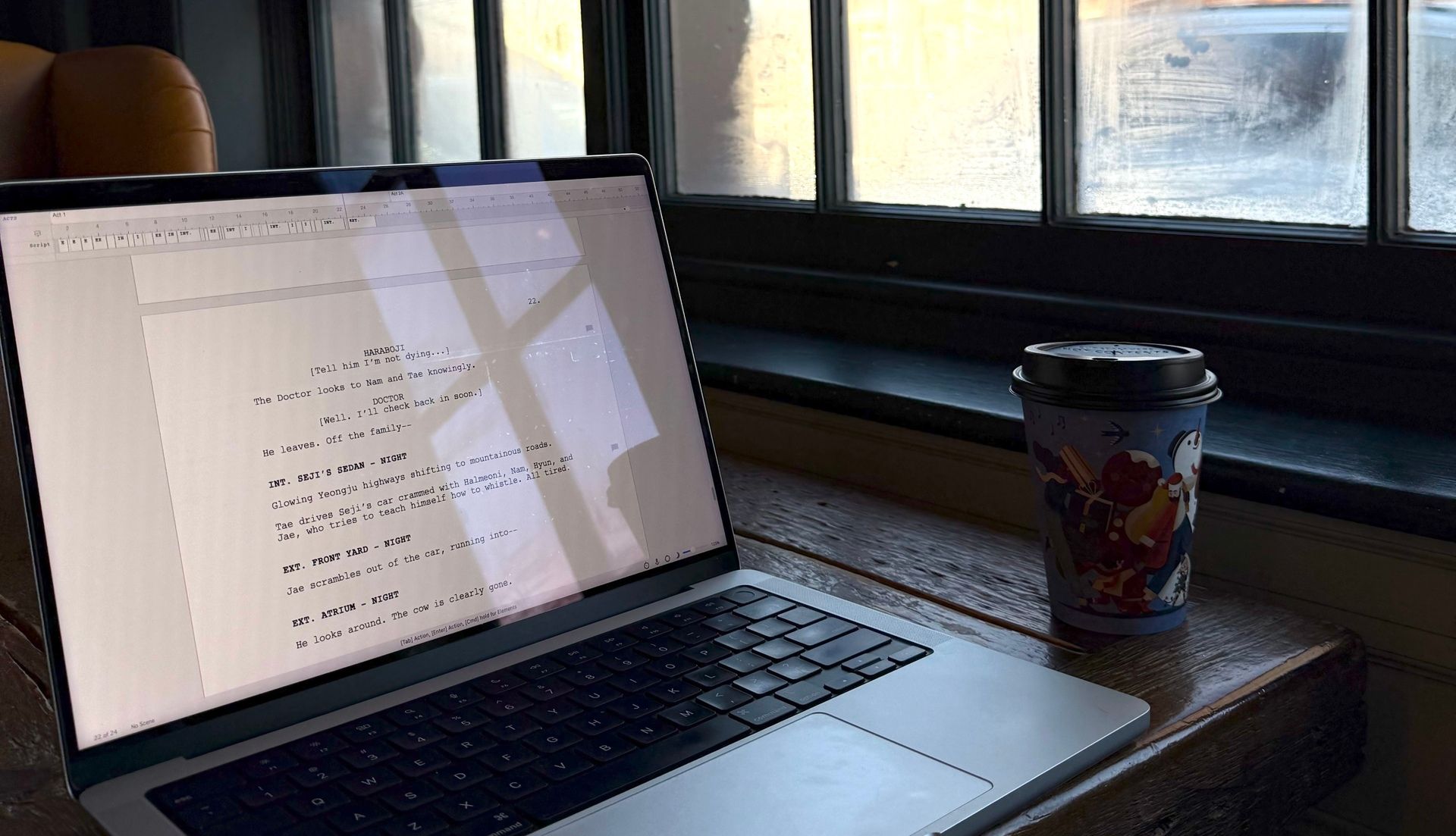
The holidays are some of the most depressing and most alive times of the year for me. On one end, I get to go home to family, pig out on my mom’s cooking, and finally hunker down on my work without distractions. On the other, I feel the pressure of the New Year creeping in, hanging over me like a sack of Santa’s coal reminding me that time is passing and things should probably be further along by now.
So how did I spend that uninterrupted time?
I spent it working on the thing I knew I needed to finish but least wanted to touch – writing the next draft of my sophomore feature, STARING AT THE SUN.
I dread full script rewrites, mostly because I know how painful the first few days always are. There’s nothing like staring down a blank page, trying to activate your imagination and enter some kind of flow state while your body feels like it’s grinding gears. Who were these characters again? What was I trying to say? Why does this matter? Where is the story even going?
It makes you question your sanity, and whether you should even call yourself an artist at all. At least, it does for me. Only after pushing through those first three to five twelve-hour days do I start to see some light at the end of the tunnel – the characters open up, bits of language and emotional logic I didn’t know I knew surface from somewhere deep in my subconscious, and scenes slowly begin to flow instead of being dragged onto the page.
I usually write for the first six hours of my day and spend the remaining six problem-solving. And after a few beautiful weeks of living inside my own head, I end up with a draft that I’m quite proud of. This is the best movie never made, and I’m a genius!
Then I put it away for weeks or months, come back to it, read it, and immediately think: who wrote this garbage?
I restart the rewriting process until I’m proud again, and by now this emotional whiplash is a pattern I’ve learned to expect.
It’s a ruthless cycle, and this time around I decided I needed help – I took a hard look at my strengths and weaknesses and tried to find a co-writer who could complement my skills. I called up my agent and everyone else I knew – nothing.
Then, out of the blue, a got a cold DM on Instagram by a Korean-Brazilian guy named Thomas Park (of all names). I never expect much from cold outreach, but I try and review everything people send because you never know.
Long story short, it paid off. He had the chops, having written many written features, but more importantly, his strengths balanced my weaknesses and vice versa. I brought creative vision, tone, and a directorial eye. He brought structure, dialogue, and an objective perspective. Together, the writing flowed in a way it never had when I was working alone.
We rebuilt the treatment and outline for STARING AT THE SUN in October, finalized it by December, and then I spent the holidays writing the next full draft.
While I still went through that initial friction period, the writing became unbelievably easier, faster, and better working with him. Instead of writing alone, putting the draft away for months, and then trying to re-enter it cold, I could send him pages as I went. He’d read them over a few days while I kept writing, and I’d get immediate, objective feedback on whether something was working and how it fit into the larger picture.
TLDR, when you work alone, each iteration of revisions can take weeks, months, or even years. You edit, send it out, wait, read notes, digest them, try to remember what you were thinking, get back into the right headspace, then edit again. With the right collaborator, you can compress that loop dramatically by testing ideas in real time. You discard bad ideas early and keep moving forward with the good ones, which compounds over time like branches growing off a tree.
I learned this same lesson while editing my first feature, ISLE CHILD. I spent nearly a year cutting it myself – editing, sharing, waiting for notes, digesting those notes, trying to get back into an objective headspace, and repeating the cycle. Once I brought on a proper editor, it felt like I ran two to three years’ worth of progress in just a few months.
Writing – or creating anything to that matter – works the same way.
Unless you consider yourself a capital-W Writer who thrives in isolation, you might want to seriously consider searching for a co-writer. Like any long-lasting relationship, it won’t be easy to find, and it might honestly be harder than finding a romantic spouse. But if you actively look for someone who complements your strengths and weaknesses, the return on that investment can be massive in an industry where one great project has the ability to launch your career into the stratosphere.*
*That said, I don’t really believe in true 50–50 partnerships. Creative work moves top to bottom. One voice needs to lead. One voice needs to make the final call. Even two chefs can be one too many if no one truly owns the dish. In this case, hierarchy matters.
Collaboration doesn’t dilute authorship – when structured correctly, it strengthens it. Because ultimately, you’re judged on the quality of the final movie and how great the story is, not that whether was created by 1 or 1000 people.
That’s why I think independent films should have writers’ rooms too, not just TV shows. Yes, indie films usually come from a singular voice, but you can maintain that as the writer/director while still surrounding yourself with strong collaborators. Look at Park Chan Wook, and how he’s able to pump out an incredible original film or TV show so consistently almost every years – he’s able to maintain that level of creativity and consistency because he has a team of writers and producers.
For me, real creativity comes from working with someone who shares my values but brings opposite skills – then empowering them to create their best work. More smart brains beats one big brain. On top of brain-power, objectivity is an invaluable tool, especially when it’s so easy to delude yourself into thinking you’ve created great work simply because you made it.
If you’re also in the middle of writing right now, give yourself some grace, give yourself time, and if you can, find a co-writer or collaborator who can help you execute your vision in exchange for creative or financial equity.
You’ll thank yourself in the long run. Not because the work gets any easier – but because you won’t be facing it alone.
📌 Thomas’s Bookmarks
My favorite links of the week to help you be wiser and more creative.
Anyone Can Build a Great Character Arc - An incredible YouTube video on the basics of storytelling and long form writing. Recommended by my co-writer.
Pidan - The craziest short film you’ll ever witness by legendary filmmaker, Bi Gan. Be prepared for your mind to melt. Film is still a young medium, and the frame really is just a blank canvas. Bi Gan is one of the rare directors who can bend cinematic language into shapes you didn’t even know were possible – with total control of the craft.
Alex Hormozi - This one’s a lot, but here’s 7 hours of pure knowledge that will change your mindset on almost anything you build now or in the future.
💾 Community Plugs
Resources for filmmakers, content creators, and industry professionals.
⭐️ Considering film school? A lot of folks have asked whether undergrad or masters film school is worth it… long story short, probably not. I’ve always dreamt of opening my own version of film school… would you invest in a small monthly membership for weekly live calls with me, our community, and high-level industry executives? Reply if so.
💃 Want to attend the 2026 Oscars? My friend helped produce an incredible short film that is Oscar shortlisted… they’re looking for $25-50K P&A donations in exchange for credit and an opportunity to attend the Oscars. Reply if you know anyone who might be interested, and I can connect y’all.
☀️ Attending Sundance this year? Let me know if you’re looking for a spare room, want to meet likeminded filmmakers, or if you catch anything outstanding that I should know about.
🔊 Know an outstanding sound designer? A community member, Ben Kadie, is looking for one for his great short film. Paid. Let me know if so. Or if you’re looking to fill any positions, I can make an appropriate intro.
🎞️ Need a pitch deck for a short or feature? I’ve created a comprehensive plug-and-play pitch deck template for independent filmmakers. Save time, and win producers and investors. If you use it, let me know what you think!
📹 Behind the Scenes
For those who don’t know, I spent last year writing a book on how I used a new tool called Crowd-Equity to finance my $1M+ feature film along with several other features that I consulted for. Well, we finally have physical, hard-cover versions!
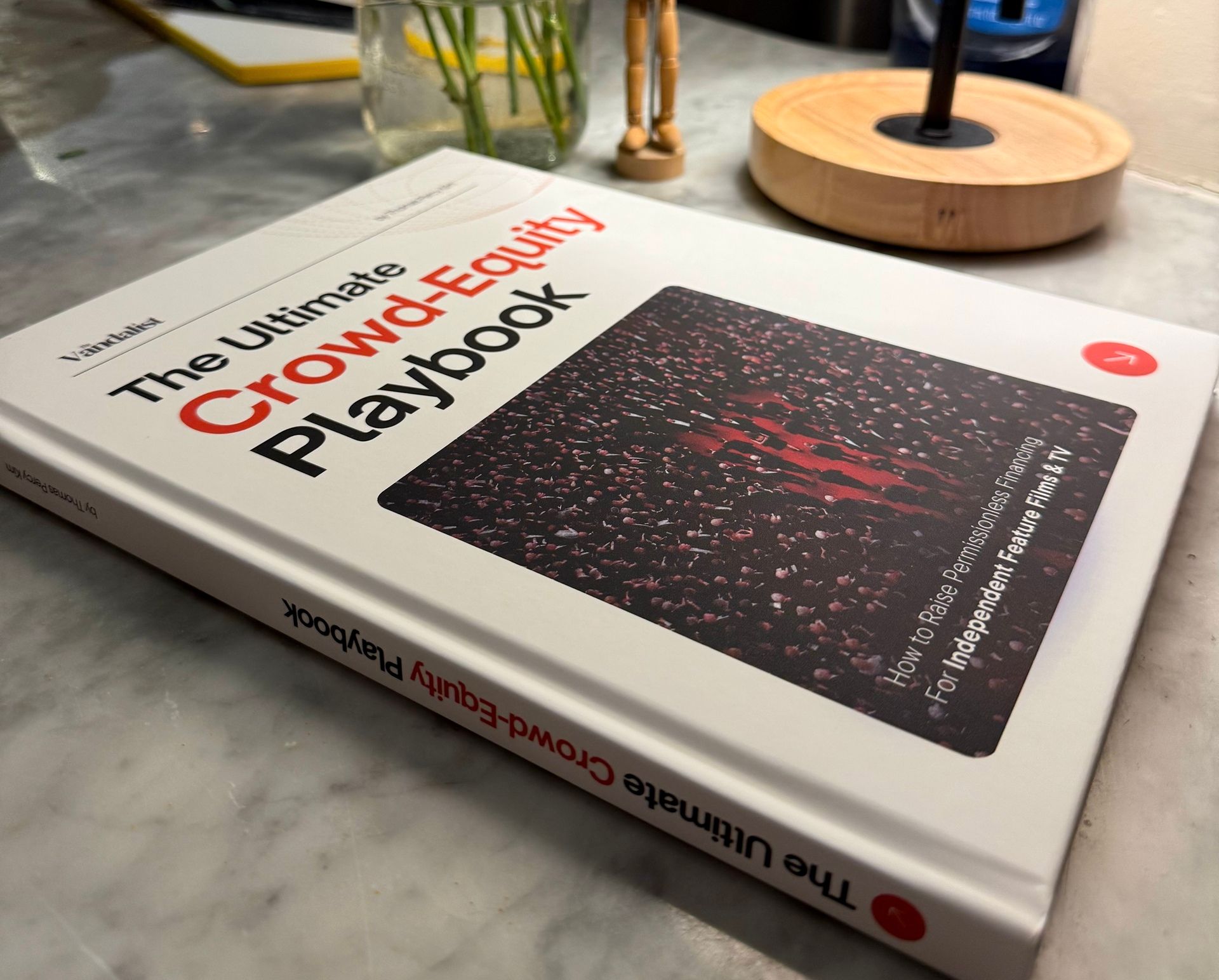
There’s nothing like seeing your first book baby. And yes, I know the spine text is upside down… we’ll fix it in the next batch copies. 😄
Thanks for reading – consider subscribing if you haven’t already, and if you enjoyed this newsletter, please consider forwarding or sharing it to a friend!
Reply