- The Vandalist Academy
- Posts
- Why Every Film You Make Is Worse Than the One in Your Head
Why Every Film You Make Is Worse Than the One in Your Head
Why that gap is less about “talent” and more about “translation”

Thomas Percy Kim
February 10, 2026
This is Thomas Percy Kim’s bi-weekly newsletter, your stories for independent filmmaking, permissionless storytelling, and building a sustainable creative career.
Quick favor: My emails have been landing in spam or Promotions due to a bug. If you want to keep seeing these, please drag this email into your Primary inbox.
If you haven’t already, join 5,000+ others who
subscribe to this newsletter, Tidbits by Thomas.
👋 Hey, it’s Thomas.
Can't believe it's already February! Hopefully we're all sticking to our New Year's resolutions (or trying to) and counting down the days til 60 degree Spring weather…
As I prep for my next feature, I've been thinking about what it takes to become a “better filmmaker”…here’s what I came up with so far. Would love to hear your thoughts!
Why Every Film You Make Is Worse Than the One in Your Head
Why that gap is less about “talent” and more about “translation”
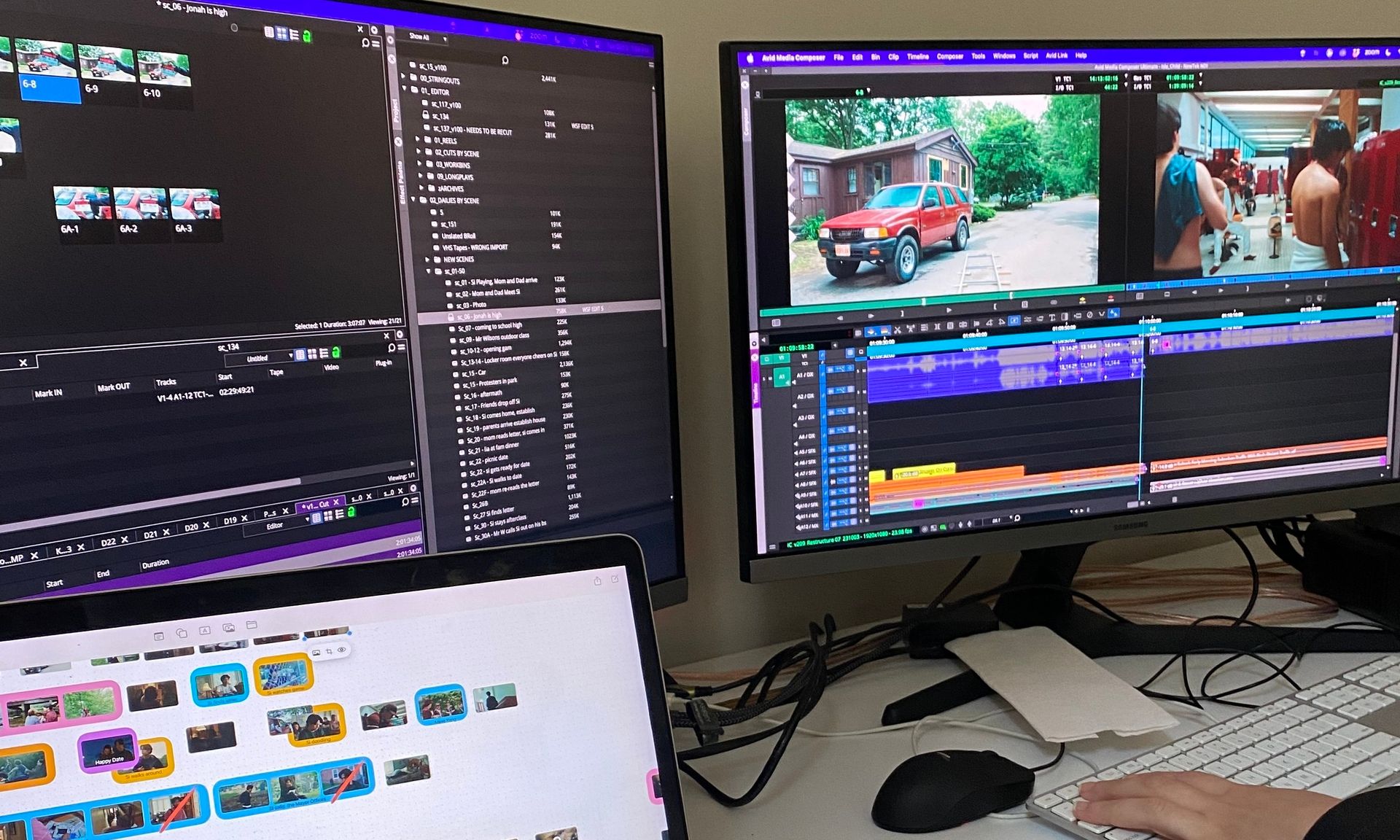
I was sitting in my edit suite at 1 a.m., watching a scene I'd spent months believing in — and I could feel it dying on the timeline.
Every cut made it worse. Every trim exposed how much the scene depended on its own words. The performances were technically fine. The lighting was beautiful. But something underneath was broken, and I couldn't fix it because the problem wasn't in the edit. The problem was baked in long before we ever rolled camera.
That was the moment I started to understand something about filmmaking that nobody told me when I was making shorts, and that I wish someone had said plainly years ago:
Every filmmaker starts with a great movie in their head. The real learned skill is how much of that movie survives the process.
Filmmaking Is “Loss” Management
Every time I start a new project, I fall for the same lie. I convince myself that this time, the movie in my head will make it out intact. When I'm writing late at night, the film feels perfect — every scene lands, every emotion is clean, and I can see it so clearly that it almost feels unfair no one else can yet.
Then script goes through prep. Prep becomes production. Production becomes an edit. The edit becomes sound and color and notes and compromises. And somewhere along the way, something essential starts to leak out. Not all at once but quietly, scene by scene.
By the time the film exists, it's recognizably mine — but it's not that movie that made me bawl over my laptop as I wrote the screenplay.
I used to think that gap meant I wasn't talented enough. That the great filmmakers simply had sharper instincts and more natural gifts, and the rest of us were chasing something we'd never reach.
After making one feature and writing my second, I see it differently. The gap between vision and result is a “translation problem”, and the filmmakers who close it are the ones who learn to manage where the “loss” happens.
Every collaborator is a filter. Every decision is an input. And the final film is an output. Between the version in your head and the version that reaches an audience, dozens of translations occur — the script translates to the set, the set translates to performance, performance translates to the edit, the edit translates to the audience. At every step, something is gained and something is lost.
The question was never whether translation loss will happen. It will, every single time. The question is whether you're learning to control where it happens and how much it costs you to get to the final product.
That's what “pattern recognition” is — the accumulated understanding of which inputs reliably produce which outputs.
Two Scenes That Taught Me This the Hard Way
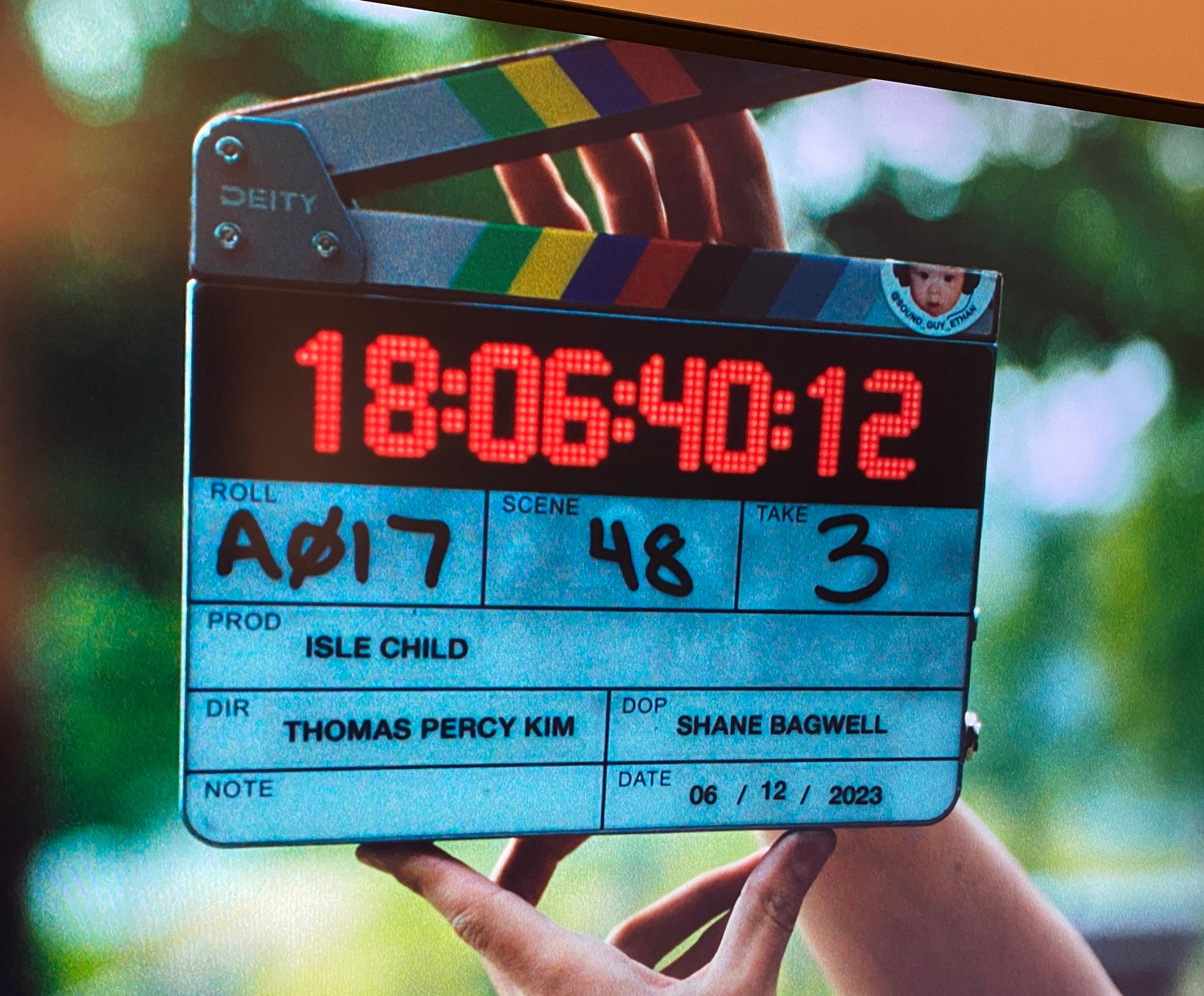
I learned this the hard way on my first feature, ISLE CHILD, and I learned it through two scenes that behaved in completely opposite ways.
The scene I loved on the page:
There's a scene in the film that I was deeply confident in during the writing process. Emotionally direct, carefully structured, every beat carrying weight. On paper, it felt devastating. I thought it was one of the emotional anchors of the movie.
On set, it already felt a little heavy. I ignored that feeling — told myself emotional scenes always feel awkward while you're shooting them. That's just how it goes. Trust the writing.
In the edit, it was undeniable.
The scene was melodramatic. The emotion was being pushed instead of discovered. You could feel the writing trying too hard to earn tears. I had written what the characters were feeling instead of giving them space to feel it. The performances were technically good, but the structure left no room for restraint or ambiguity. Once that kind of scene tips over, there's no saving it — cutting lines only revealed how much the scene depended on them.
The lesson was painful: a scene can be strong on the page and still be fundamentally unfilmable in the way you imagined it. Writing clarity doesn't equal cinematic truth.
Then, the scenes I dreaded:
At the same time, there were moments with teenage boys whose dialogue felt fake and annoying in the script. Fratty, surface-level, almost embarrassing. I remember reading those pages and thinking, this is going to be the weakest part of the movie.
On set, everything changed.
I stopped protecting the lines. Let the actors interrupt each other, step on dialogue, bring their own rhythm and vocabulary into the scene. The words became less important than the energy — and once I focused on behavior instead of precision, the performances stopped feeling like acting. They felt like real kids being real kids.
Those scenes ended up becoming some of my favorite moments in the film.
The lesson was the inverse of the first — a scene that feels weak on the page can still come alive if the process supports the outcome you actually want.
In both cases, the quality of the writing didn't predict the quality of the scene. The process did.
Why Shorts Keep People Stuck
This is where a lot of filmmakers stall — especially for writer/directors. Short films optimize for ideas. Features force you to optimize for systems. That's the graduation gap, and most people don't even realize they're stuck in it.
When you're making shorts, you can hide in development. You can rewrite endlessly. You can protect the imaginary version of the film in your head for months or years and accumulate maybe fifteen total days of directing on set across three to five projects. That phase feels productive because it's safe.
A feature film doesn't let you hide.
On a feature, you're making decisions for twenty-plus days straight. You're directing wildly different kinds of scenes — intimate dialogue one day, a big emotional set piece the next, transitions you never planned for. Your blind spots don't stay hidden long enough to protect your ego. Small choices compound into big problems. And your pattern recognition accelerates because the feedback loop is brutal and continuous.
In one of my previous newsletter stories, I wrote about editing ISLE CHILD myself for nearly a year, stuck in the slow loop of editing, sharing, waiting for notes, digesting, and repeating. When I finally brought on a proper editor — someone who could see what I couldn't — it felt like compressing years of learning into months. The inputs changed. The output transformed.
One imperfect feature film often teaches more than several "perfect", award-winning shorts. At least, it did for me.
Reps Are Not the Goal
To get better as a filmmaker and recognize our own translation process, we need to practice. It’s a simple formula: quantity x quality. However, you must note that this is a bell curve, and we have to optimize for the fewest quantity for the highest quality of films. Why?
Because in filmmaking, the only rep that counts is the final film. That's your one-rep max. No one cares how many projects you started. They care what you finished, and how good it is. Quantity of reps are only important in the training, AKA the short films, if your end goal is to make features.
Too many low-quality reps numb you into thinking you're progressing. Too few reps keep you delusional about how your decisions actually behave under pressure.
The goal is calibrated repetition — enough real attempts, under real constraints, to build pattern recognition that transfers to the next project. Volume without reflection teaches nothing. Reflection without enough volume is just mental masturbation.
What Changes on the Second Film, STARING AT THE SUN
On my first feature, my fear was about boldness. I was worried the film wouldn't be big enough, daring enough, visually ambitious enough to justify the years it took to make it.
What scares me now about STARING AT THE SUN is knowing how much I don't know. After making one feature, you lose the illusion that filmmaking is something you can fully understand ahead of time. You start to see how many invisible forces shape the final result — performances shifting in the edit, locations rewriting scenes, tone drifting over time, small compromises compounding into big ones.
I'm less afraid of taking risks and more afraid of blind spots. The mistakes I haven't made before. The failures I don't know how to anticipate. That’s why I decided to secure the main locations for STARING AT THE SUN before even finishing the script.
The first film teaches you about confidence. The second teaches you humility.
Aiming Into the Wind
Every film you make is like an arrow. You aim at the target — that perfect movie in your head — and you release. But there's always wind — performance. Budget. Time. Other people's taste. Translation loss.
Your first arrows miss badly. And it's tempting to blame the arrow — to think you need a better concept, a sharper script, a more brilliant idea. But the arrow was never the issue.
Pattern recognition is learning how the wind bends your shot, to better predict the outcome. Each film teaches you something about the direction and force of that wind, and over time, you learn to aim into it — to account for the distortion before it happens, not after.
That knowledge doesn't come from studying filmmaking books or watching director interviews. It comes from shooting those arrows, watching where they land, and subconsciously micro-adjusting along the way.
Trust the movie in your head… then study how it changes on the way out. The more you understand that journey, the more of your original vision survives.
That's how we become better filmmakers.
📌 Thomas’s Bookmarks
My favorite links of the week to help you be wiser and more creative.
Markiplier's Iron Lung just did $21.7M on a $3M budget — A YouTuber self-financed a feature film, mobilized his audience, and outperformed studio expectations in theaters. This is the permissionless distribution model in action… and independent filmmakers should be paying very close attention to what it means for the future of getting your film in front of audiences…
Roy Lee on building a one-person software company with AI — Terrible YouTube title, but fascinating thoughts from a young founder in Silicon Valley. Roy built a software product in two weekends using AI, launched it for $33, and scaled it to millions in revenue with 90%+ margins. Divisive opinions, but I root for his philosophy on leveraging permissionless creation… in tech or otherwise.
💾 Community Plugs
Resources for filmmakers, content creators, and industry professionals.
🎞️ Need a pitch deck for a short or feature? I created a comprehensive plug-and-play pitch deck template for independent filmmakers. Save time, win over producers and investors. Reply here, and I’ll send it your way.
🎬 Crowdfunding a short film? The Short Film Crowdfunding Playbook is live — a step-by-step guide to raising funds outside your personal circles. Grab a copy here.
✍️ Looking for a co-writer? This essay is basically my case for why you should find one. If you're a writer-director searching for someone to complement your strengths, reply with a short description of your project and what you're looking for — I'll try to connect you with someone in the community.
✂️ Need an editor who can see what you can't? One of the biggest lessons from ISLE CHILD was how much a great editor compresses your growth. If you're sitting on a cut that feels stuck, reply with what you're working on and I'll do my best to make an intro.
💡 Community spotlight: If you've recently wrapped a short, locked a feature cut, or hit a milestone you're proud of — reply and tell me about it. I'd love to start highlighting community wins in future newsletters.
📹 Behind the Scenes
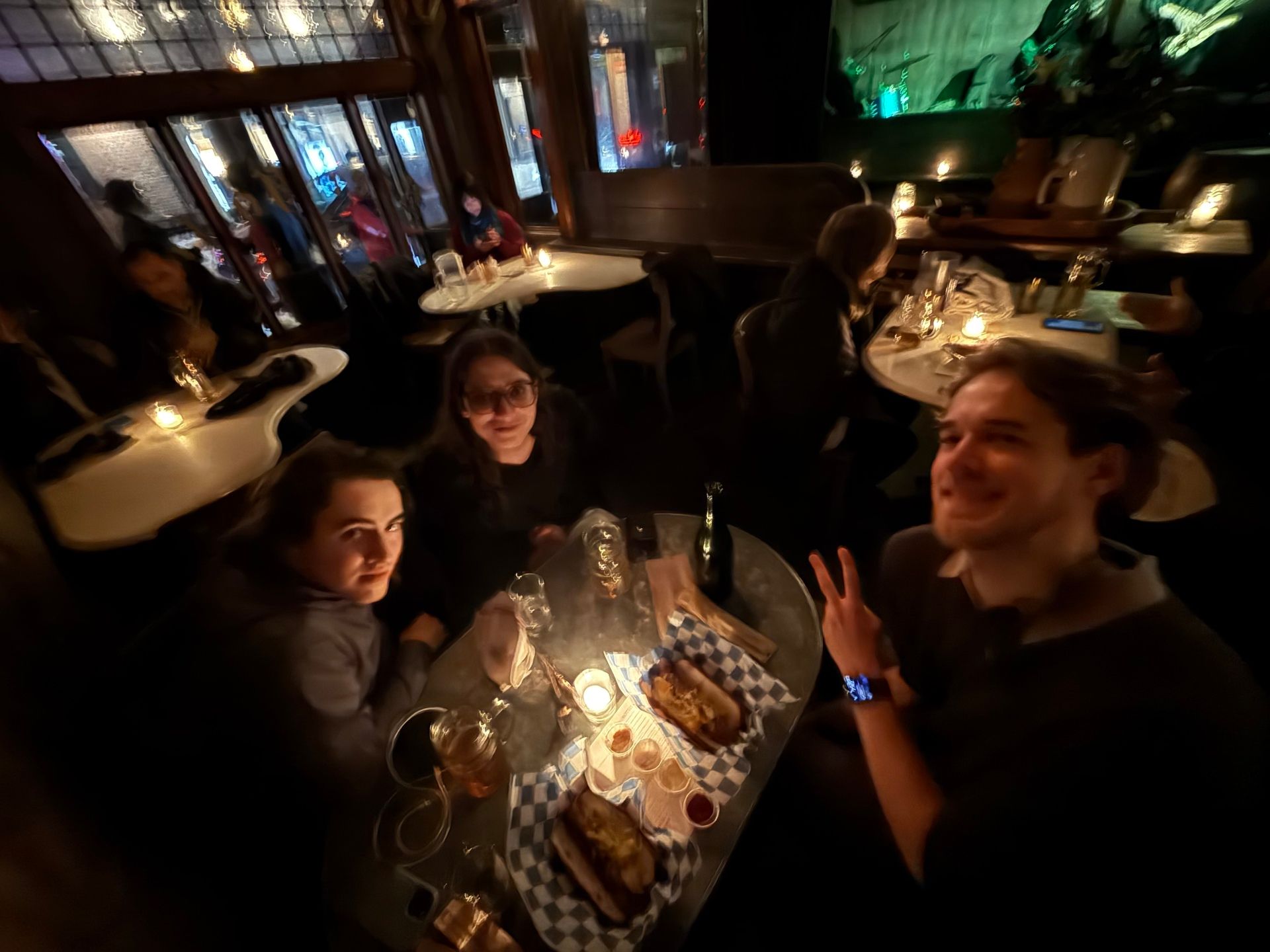
Restaurant Recc: Radegast Hall & Biergarten
For my NYC folks... check out this hidden gem I found in Williamsburg! Imagine Hogwarts cafeteria + Irish pub… highly recommend as a place to hang with friends — get the bratwurst!
P.S. I turned 25 today… oh, how I wish I didn’t.
Thanks for reading! Consider subscribing if you haven’t already, and if
you enjoyed this newsletter, please consider forwarding it to a friend!
Reply